Engine data

Engine management systems explained

An engine management system gives you real-time insight into the health of your engine as well as important on-board systems such as fuel and water tanks. Whereas you used to rely on separate meters scattered around the dashboard, a modern system provides one central overview of all crucial information.

But what exactly is it, how does it work and how can you actually view the data?

Table of contents

What is an engine management system?

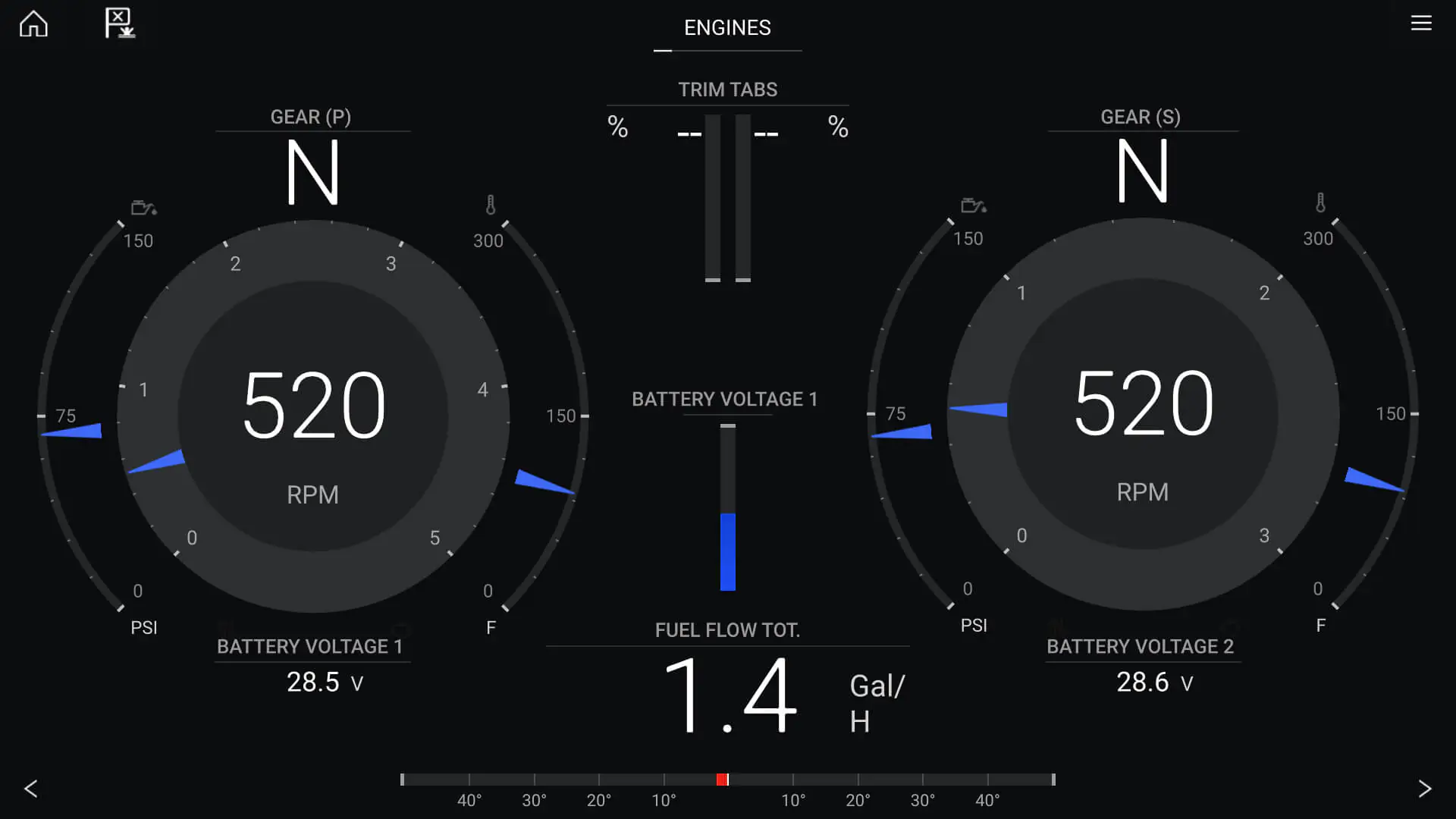
An engine management system is an electronic monitoring system that collects data from sensors on and around the engine. This data is processed and made visible on displays, map plotters or mobile devices.

Instead of separate meters for RPM, temperature and pressure, an engine management system combines all information in one overview. This gives you not only individual values, but also consistency and trends.

The system helps you spot anomalies early and make better-informed decisions while sailing.

Engine management boat

How does an engine management system work?

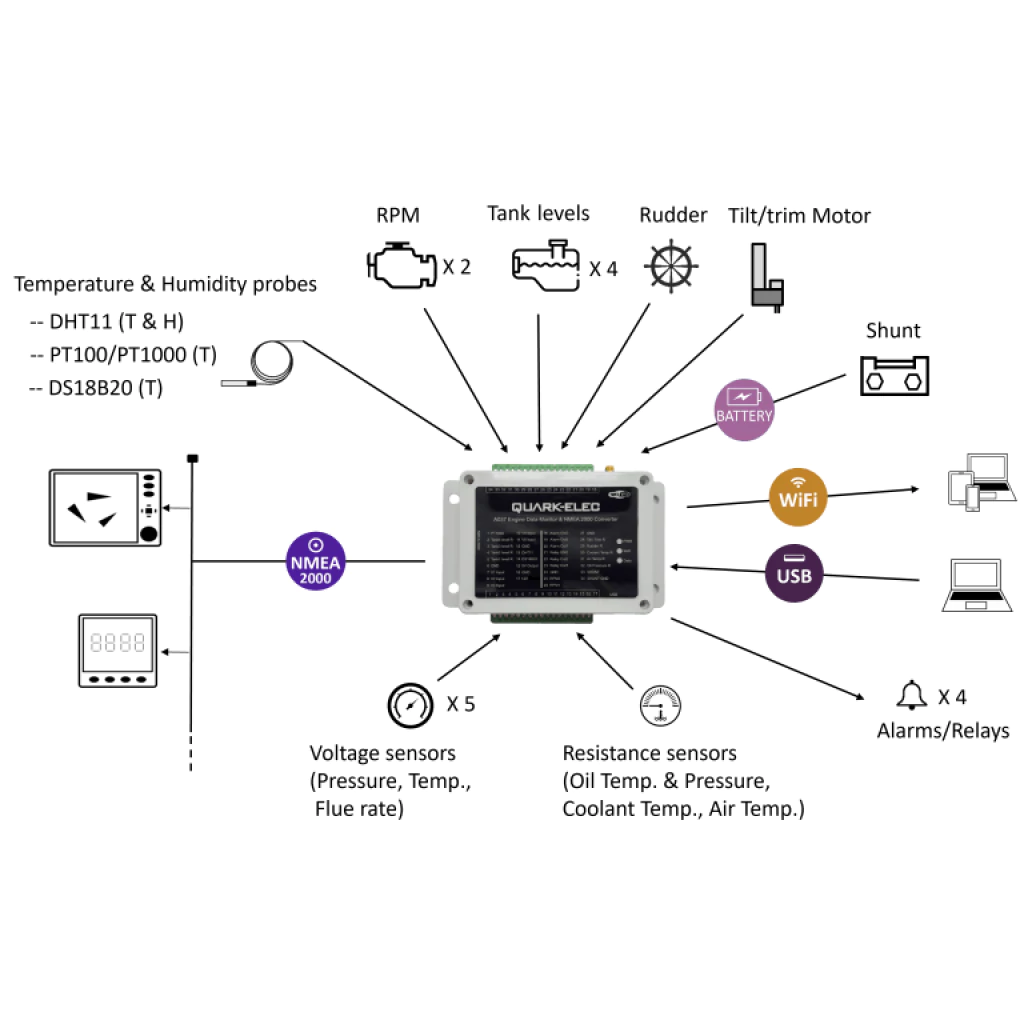
An engine management system consists of three parts:

Sensors
The engine and tanks contain sensors that measure values such as temperature, pressure, level and voltage.

Converter / gateway
It converts analogue or digital signals to a network format that other devices can understand.

Network & display
Data is distributed over a network to displays, plotters or wireless devices.

Briefly:

Sensor → Converter → Network → Display

At modern engines the data often comes digitally from the engine computer.
Older engines provide analogue signals that must first be converted.

What is the difference between engine management and engine control?

Engine management measures and displays engine status information such as temperature, pressure and speed.

Motor control Controls functions such as starting, throttle and shifting.

So engine management does not directly affect operation, but it does provide crucial information that you can use to prevent damage.

Why is motor monitoring important?

Real-time insight prevents major damage.

⚠️ A rising cooling water temperature may indicate a blockage.
⚠️ Falling oil pressure may indicate a lubrication problem.
⚠️ Voltage problems can affect charging performance.

Immediate insight into these values allows you to intervene before things go wrong.

In addition, monitoring helps with:

✅ Preventive maintenance
✅ More efficient use of fuel
✅ Safety during longer trips
✅ Better planning of service intervals

Which engine parameters can you monitor?

Engine management boat

Depending on the system, you may see the following values, among others:

✔️ Speed RPM
✔️ Oil pressure
✔️ Oil temperature
✔️ Cooling water temperature
✔️ Cooling water pressure
✔️ Battery voltage
✔️ Generator or charging current
✔️ Fuel pressure
✔️ Engine hours
✔️ Alarm status

Many systems also show trends over time 📈 , making anomalies more readily apparent.

Can you also integrate tank levels into the system?

Yes, and this is an important extension.

In addition to engine parameters, tank levels can also be integrated, such as:

⛽ Fuel tank
🚰 Drinking water tank
💧 Holding tank
💩 Grey water tank

Most boats have analogue level sensors in these tanks. With an analogue-to-network converter, these signals can be converted to digital data and made visible on the same displays as the engine data.

On one screen, you can then see both your engine data and tank levels. This prevents surprises during longer trips and gives peace of mind on board. Alarms can also be set 🚨 e.g. in case of low fuel or a nearly full holding tank.

How does all data become visible on board?

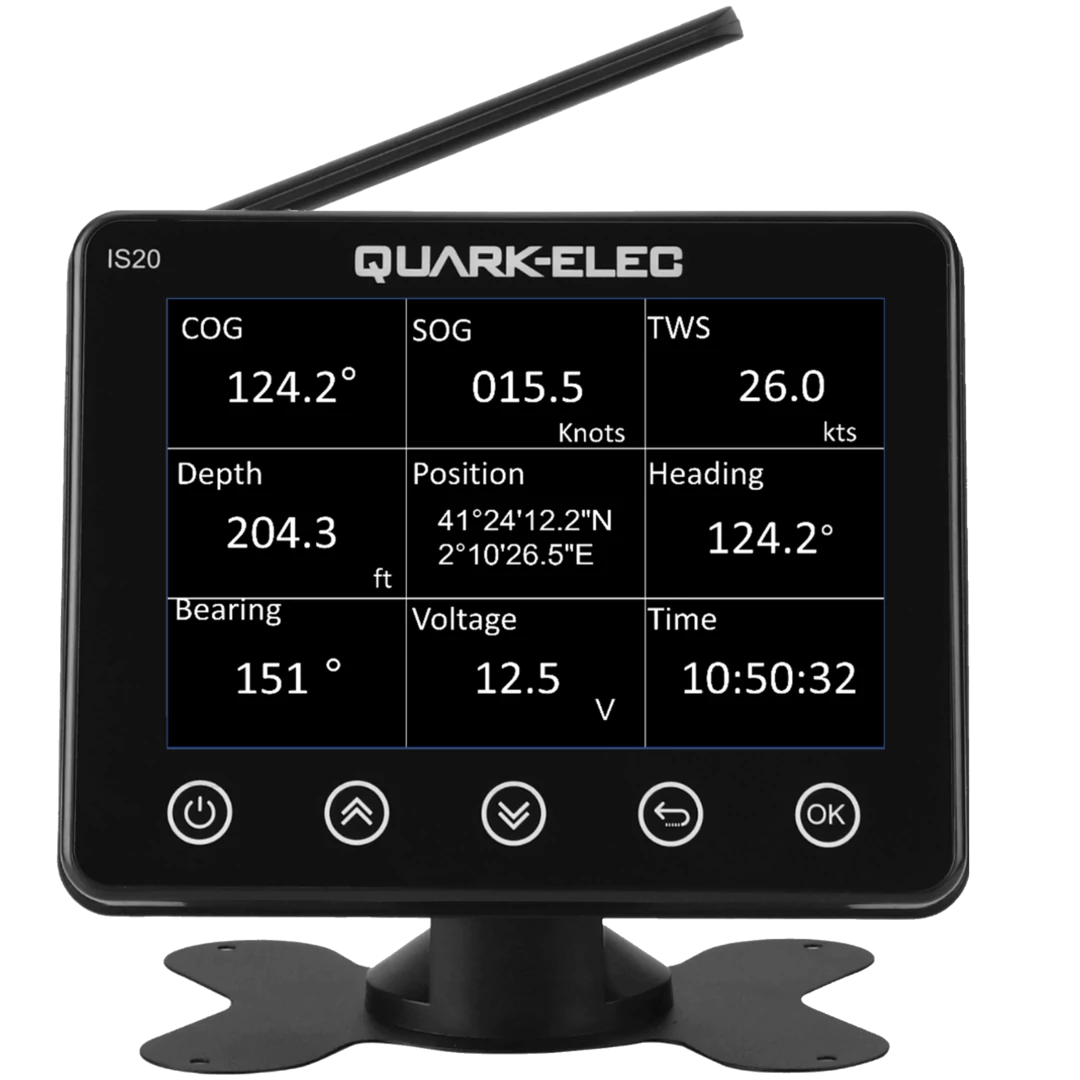
Quark-Elec IS20 Multifunction display with touchscreen + WiFi

Multifunction displays

Display engine and tank data clearly in graphs and figures.

STS13_SailProofTouch

Chartplotters

Combine navigation and engine data on one screen.
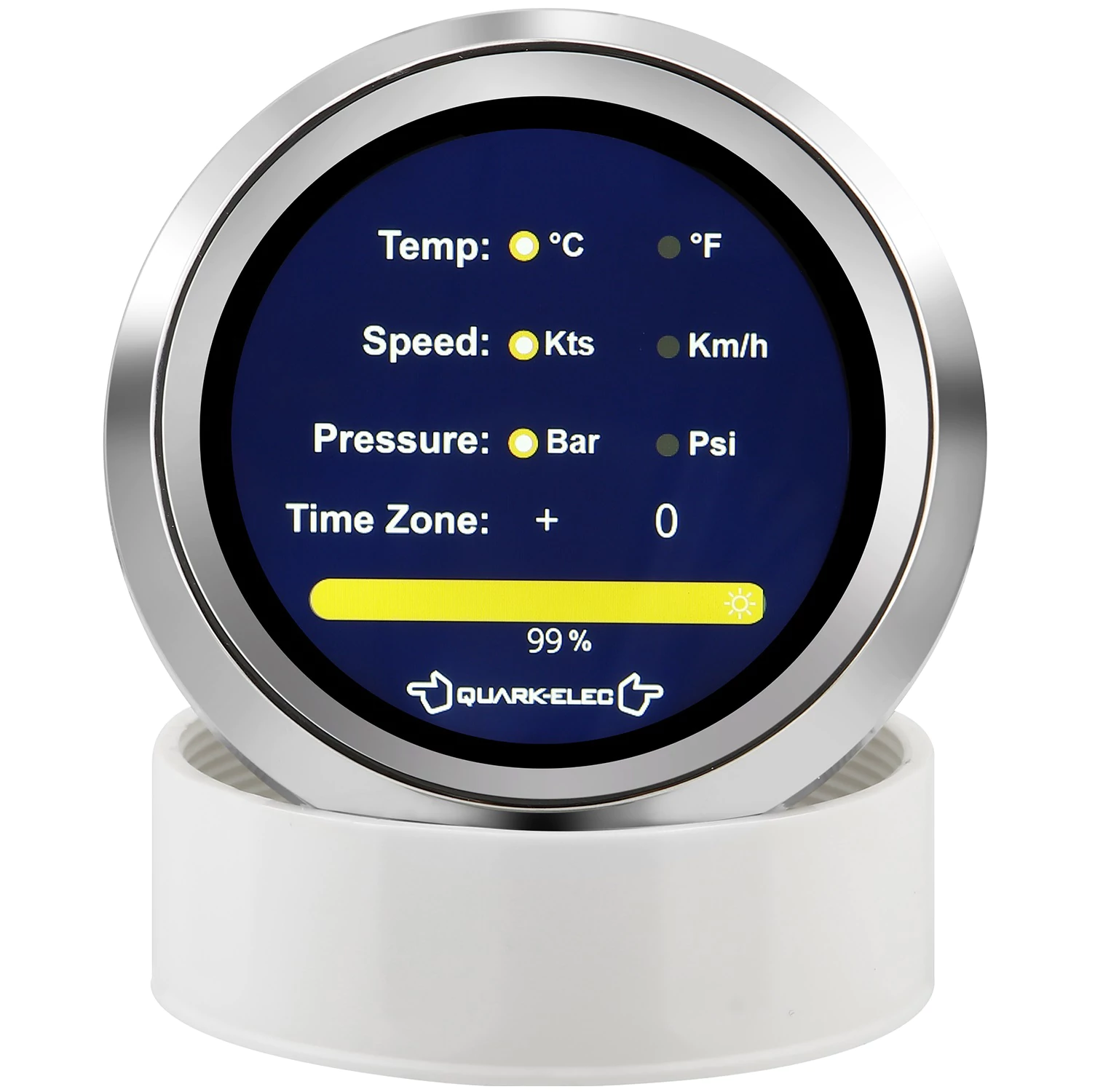
Quark-Elec IS10 NMEA 2000 Digital Touchscreen meter

Touchscreen dashboards

Dedicated motor displays show extensive information with alarm functionality.
There are several options. This creates one central overview in the steering position.

Can you also view engine data via an app or web interface?

Yes, and this is becoming increasingly popular!

Apart from display on a chartplotter, you can also view engine data via apps on a tablet or smartphone. Via an NMEA network gateway with WiFi, the data is made available wirelessly.

These apps (and others) can clearly display engine data, tank levels and other network data on a mobile device.

In addition, many modern NMEA WiFi devices have a built-in web interface. Here, you connect to the device via a browser and access a dashboard with real-time data.

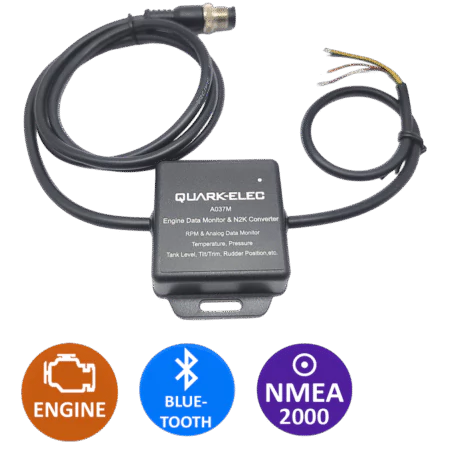
One example is the Quark-Elec A037. This gateway has an integrated web dashboard interface that lets you:

  • View motor parameters
  • Be able to monitor tank levels
  • Can check network data
  • Adjust settings

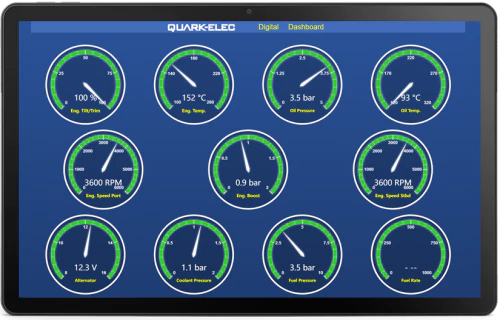
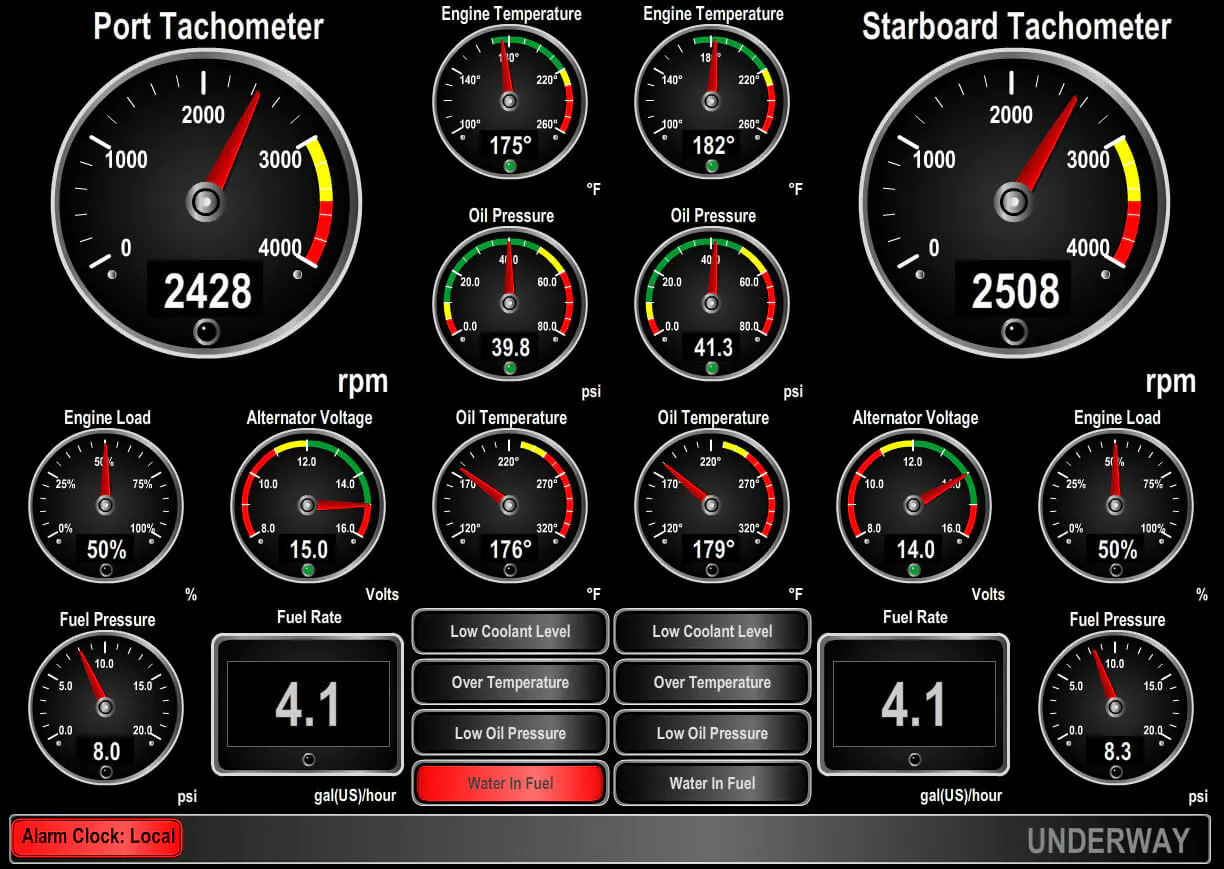
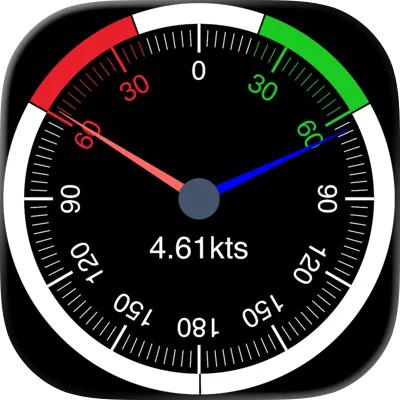
What makes this solution extra interesting is that the A037 even offers an analogue dashboard display with classic round clocks in the web interface. This allows you to display a traditional-looking engine dashboard with tachometer, temperature gauge and other analogue gauges on any mobile device, via a regular browser.

You don't need a separate app for this, just a browser on your phone, tablet or laptop. So you can easily create an extra digital dashboard in the cockpit or at the chart table.

A037_webpage_on_tablet

Which network standard is used on board?

The most commonly used standard is NMEA 2000.
This is a maritime network that allows several devices to share data over a single backbone cable.

Advantages:

✅ Reliable communication
✅ Expandable system
✅ Compatible with many brands
✅ Data and power over the same network

With a WiFi gateway, the same data can also be made available wirelessly.

How to choose the right system for your boat?

When choosing an engine management system look at:

  1. Engine type
    Does the engine have a digital interface or only analogue signals.
  2. What data do you want to see
    Only basic values or also tank levels and trend analysis.
  3. Existing network
    Is there already an NMEA 2000 network on board.
  4. Future plans
    Want to expand later with energy monitoring or additional sensors.

A well-chosen system grows with your installation.

Conclusion

An engine management system is more than just a digital tachometer. It is a complete monitoring system that provides insight into:

  • Engine performance
  • Safety-critical values
  • Tank levels
  • Energy and charge status
  • Wireless display via apps and web interfaces
  • Analogue dashboard display on mobile devices

Combining engine and tank data creates one central overview of your vessel's technical condition.

That means fewer surprises, better maintenance and safer sailing.

If you want advice on which solution suits your engine and on-board network, we will be happy to look at it with you.